
Low-Cost, Efficient and Sustainable: What is Nanotechnology?
The term "nanotechnology" first introduced by American physicist Richard Feynman in his 1959 speech titled "There's Plenty of Room at the Bottom" is now a common and frequently used concept in our daily lives. Before moving on to the use of nanotechnology in our daily lives and its importance in the energy sector, let's look at what this term means.
What is Nanotechnology?
The European Commission defines nanotechnology as a branch of science and engineering dedicated to designing, producing, using devices and systems by manipulating atoms and molecules at the scale of 100 nanometers, which is one hundred millionth of a millimeter. The prefix "nano" is used to describe a specific size, similar to millimeters or centimeters; a nanometer is equal to one billionth of a meter or one millionth of a millimeter. In essence, nanotechnology refers to the collective efforts in science, engineering and technology conducted within the dimensions ranging from 1 to 100 nanometers.
How do we use Nanotechnology in our daily lives?
We previously mentioned the frequent use of this technology in our daily lives and here are a few examples. Nanotechnology is widely employed in the cosmetic industry, with nano-sized components in products such as sunscreens, moisturizers and antioxidants, enhancing their diffuze into the skin and effectiveness. In electronic devices, especially with advancements in semiconductor technology, nanotechnology enables the production of smaller and more powerful devices. Nanomaterials find applications in energy storage systems like more efficient solar panels or higher-capacity batteries, contributing to easier energy efficiency. Additionally, nanotechnology extends its influence to various fields such as food packaging, cleaning products and the pharmaceutical industry.
So, how do products utilizing nanotechnology provide benefits in our daily lives? Let's take a closer look at items like glasses, computer screens, and camera displays. These products often incorporate transparent nano-scale films. Thanks to nanomaterials, these products can become water and residue-resistant, anti-reflective, self-cleaning, resistant to ultraviolet or infrared light, fog-resistant, antimicrobial, scratch-resistant or conductive.
Nanotechnology enhances efficiency and provides additional benefits in the energy sector
Nanotechnology, widely used in various sectors, also plays a crucial role in the energy industry. It significantly contributes to the development of alternative energy approaches to meet the world's increasing energy demands. According to the National Nanotechnology Initiative (NNI), nanotechnology is a key player in addressing climate change, promoting sustainable and affordable renewable energy sources, reducing energy consumption and protecting the environment from adverse effects. But how does it achieve this?
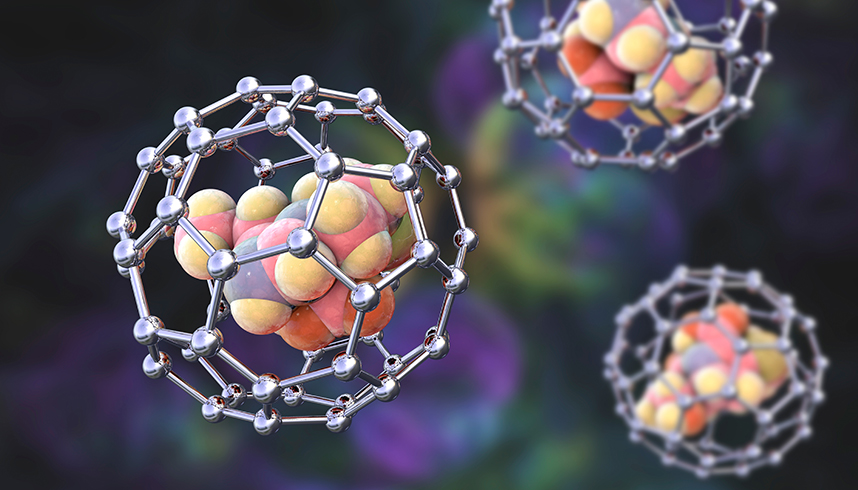
“Nanotechnology is a key player in addressing climate change, promoting sustainable and affordable renewable energy sources, reducing energy consumption and protecting the environment from adverse effects.”
- Nanotechnology enhances the efficiency of fuel production from raw petroleum materials through improved catalysis. Simultaneously, it allows for the reduction of fuel consumption in vehicles and power plants through higher efficiency combustion and lower friction.
- In offshore oil and gas extraction operations, effective gas lift valves using nanotechnology or nanoparticle-based methods are employed to detect microscopic cracks in pipelines at the wellbore bottom.
- Nanotechnology can be applied in solar panels to convert sunlight into electricity more efficiently, leading to lower costs in solar energy production. The production of solar cells with nanomaterials is cheaper and easier to install.
- Various new types of batteries, offering faster charging, higher efficiency, lighter weight, greater power density and longer electrical retention are developed using nanotechnology.
- Carbon nanotube-infused epoxy is used in constructing wind turbine blades, making them longer, stronger and lighter, thereby increasing the amount of electricity wind turbines can generate.
Nanotechnology continues to evolve as a developing technology. Scientists are actively conducting research based on nanoscience. For example:
- Researchers are working on technologies that can harness motion and waste heat for usable electrical energy.
- Studies are being conducted on carbon nanotube membranes to separate carbon dioxide from power plant emissions.
- They are developing carbon nanotube-infused wires with significantly lower resistance than high-voltage wires used in the electrical grid, thereby reducing transmission power losses.
How is Nanotechnology used in the petrochemical sector?
Nanotechnology is causing a significant transformation in the petrochemical industry by enabling the production of advanced materials. In addition to making petrochemical-based products more effective and versatile, nanotechnology enhances efficiency in production processes. Nanotechnology can also provide environmentally friendly solutions in areas such as waste management and water purification. Let's illustrate this with a few examples:
- Catalyst development: Nanotechnology is widely used in the development of catalysts in the petrochemical industry. Nano-sized catalysts can increase the speed of chemical reactions, reduce the formation of unwanted by-products and lower energy costs.
- Polymer materials: Nanotechnology is applied to develop polymer materials. Nano-sized additives can enhance the durability, flexibility and thermal properties of polymers, resulting in the production of more robust and functional polymers.
- Protective coatings: Nanomaterials can be effective in coatings used during the transportation and storage of petrochemical products. They can extend the lifespan of infrastructure elements such as pipelines or storage tanks by providing high durability and corrosion resistance.
- Raw material improvement: Nanotechnology can be utilized in the processing and refining of crude oil. Nano-sized additives or membrane technologies can enhance efficiency in refinery processes and improve the quality of products.
- Sensors and monitoring: Nanotechnology is effective in developing precise sensors used in industrial processes. These sensors monitor parameters such as temperature, pressure, and chemical composition, making processes more controllable in petrochemical facilities.
Our efficient use of nanotechnology in the CARMOF project
We have developed a new process in our CARMOF project, funded by the European Commission's Horizon 2020 Grant Program to efficiently capture carbon dioxide (CO2) using metal-organic cage structures and innovative adsorbents based on carbon nanotubes as SOCAR Türkiye R&D and Innovation Inc. This project aims to capture carbon dioxide emitted into the atmosphere with innovative materials and methods in an energy and cost-efficient manner. Innovative materials like porous metal-organic cages (MOFs) and carbon nanotubes are produced using three-dimensional printing technologies. The working conditions are optimized and adsorption with temperature oscillation is tested under industrial conditions, preventing harmful emissions of carbon dioxide into the atmosphere.
We are advancing towards becoming one of Europe's leading petrochemical complexes and production bases with strong strides in sustainable investments, innovative technologies and digital transformation. We invest in innovation, one of the main triggers of industrial growth, and continually expand our R&D and Innovation capacity with innovative projects.
We work for a brighter tomorrow with today's energy.